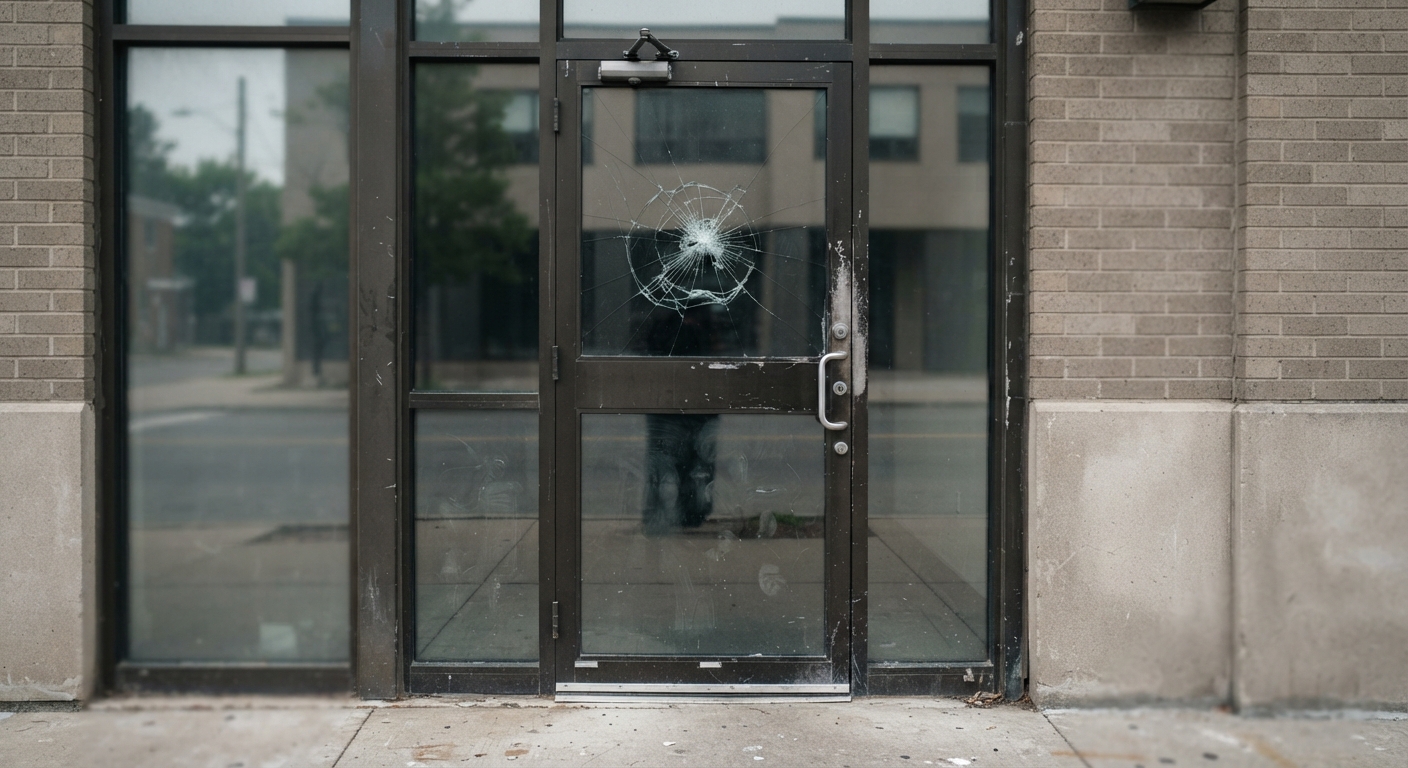
A commercial door problem rarely arrives at a convenient time. A door may stop closing before opening hours, a hinge can begin dragging against the frame, or broken glass can leave an entrance exposed. In Concord, where businesses depend on reliable access for staff, customers, deliveries, and equipment, a damaged door deserves prompt attention.
Commercial door repair covers more than replacing a visible part. The condition of the frame, hinges, glass, closer, lock, and surrounding hardware can all affect how the door operates. A sensible inspection looks at the complete system rather than treating one symptom in isolation.
What counts as a commercial door problem?
Commercial doors are used more frequently than most residential doors. They may be opened hundreds of times during a busy day, sometimes by people carrying stock, pushing carts, or moving equipment through the opening. That repeated use places stress on hinges, fasteners, locks, closers, frames, and glazing.
Common warning signs include a door that rubs on the threshold, a latch that misses the strike plate, a closer that slams the door, or a handle that feels loose. Drafts around the opening can point to worn seals or poor alignment. Cracked glass, bent hardware, and visible gaps around the frame need attention as well.
Some faults are easy to see. Others develop gradually. A door that needs to be lifted slightly before it closes may have alignment or hinge trouble. A lock that works only when the door is pulled toward the frame can indicate movement in the door, frame, or strike area. These details help identify the likely source of the problem.
Why should small door faults be dealt with early?
A minor operating issue can place extra strain on several components. If a door drags, users may push or pull harder. That force can loosen fasteners, distort the frame, or damage the closer. When a latch does not engage properly, staff may leave the door unsecured or prop it open, creating additional safety and access concerns.
Early commercial door repair can also reduce disruption. A door that is difficult to operate slows deliveries and creates queues at busy entrances. For internal doors, the issue may affect access between work areas, storage rooms, offices, or service spaces. A timely inspection gives the property owner a clearer choice between adjustment, part replacement, and a larger repair.
Which parts should be checked during an inspection?
A useful inspection should follow the movement of the door from the frame to the hardware. The following areas deserve attention:
- Hinges: Check for loose screws, worn mounting points, corrosion, distortion, or movement at the hinge side.
- Frame: Look for bends, damaged anchors, separated joints, and contact points where the door rubs.
- Closer: Observe whether the door closes smoothly, latches fully, and avoids slamming.
- Latch and strike: Confirm that the latch enters the strike cleanly without forcing the handle.
- Lock and handle: Test operation from both sides where appropriate, watching for stiffness, looseness, or inconsistent engagement.
- Glass and glazing: Check for cracks, chips, loose glazing materials, and movement around the pane.
- Weather seals: Look for gaps, compression damage, and sections that have pulled away from the frame.
Commercial hinge repair may be the right focus when the door sags, binds, or develops uneven gaps. However, replacing a hinge without checking the mounting surface may leave the underlying problem in place. The fastener holes, frame condition, and weight of the door all matter when selecting a repair approach.
What should you do when commercial door glass breaks?
Broken glass needs a cautious response. Keep staff and customers away from the area, avoid touching loose pieces, and do not continue using the opening if movement could cause more glass to fall. A temporary barrier may help control access until the damage can be assessed.
Broken Glass Repair involves more than fitting a replacement pane. The size and position of the opening, the condition of the frame, the glazing method, and the type of door all affect the work. A supplier can help identify the information needed for an assessment, including clear photographs, approximate dimensions, and whether the glass is cracked, shattered, or missing.
Do not assume that a visible crack is harmless. Vibration from repeated door movement can extend damage, especially where the pane is near a hinge, closer, or busy passage. The safest choice is to limit use and arrange an inspection.
How can businesses prepare for an urgent lock problem?
A lock fault can affect opening access, closing access, or both. Before calling for help, note what is happening. Does the key turn but fail to retract the latch? Is the key difficult to insert? Does the handle move while the latch stays fixed? Is the problem limited to one side of the door?
These observations can distinguish a mechanical lock issue from a door alignment problem. For example, a lock may appear faulty when the door has shifted and is putting pressure on the latch. Forcing the key or applying excessive pressure to the handle can worsen the damage.
Locksmith Service may be relevant when a commercial entry cannot be secured or opened normally. Keep the area controlled while waiting for an assessment, and have an authorized contact available to confirm access requirements. If several staff members use the door, record which keys or access methods are affected.
What information helps a repair assessment?
Clear information makes the first conversation more useful. Record the door location, approximate size, material if known, and the symptoms you have noticed. Photos of the full door, hinge side, lock area, frame, and any damage can provide helpful context. Include a picture showing the surrounding opening, not just a close view of one component.
Also note when the problem began and whether it followed an impact, renovation, delivery, weather event, or change in usage. A door used occasionally may have a different wear pattern from an entrance used throughout the day. If the door is part of a busy route, explain the access limitations so the repair can be considered in context.
How can Concord businesses reduce repeat door problems?
Regular observation is simple but valuable. Staff can report rubbing, loose handles, unusual noises, slow closing, and changes in locking behaviour before these faults become disruptive. A short check during routine building inspections may identify issues that are easy to miss during a busy shift.
Keep the area around the door clear. Carts, stock, bins, and floor mats can interfere with movement or cause users to push the door at an angle. Avoid propping a door open with heavy objects, since this can place stress on hinges, closers, and the frame. Use the hardware as intended, and do not force a lock or latch when resistance appears.
When a repair is needed, choosing a company familiar with commercial door repair in Concord gives the property owner a practical local starting point. Summit premium services Inc is a Garage door supplier serving Concord, ON, with work related to commercial Door repair, commercial Hinge Repair, Broken Glass Repair, and Locksmith Service. Visit Summit premium services Inc to learn more and share the details of the door issue.
A well-functioning commercial door supports safe, dependable access every day. Paying attention to early signs, controlling urgent damage, and providing accurate information during an assessment can help businesses make better repair decisions.