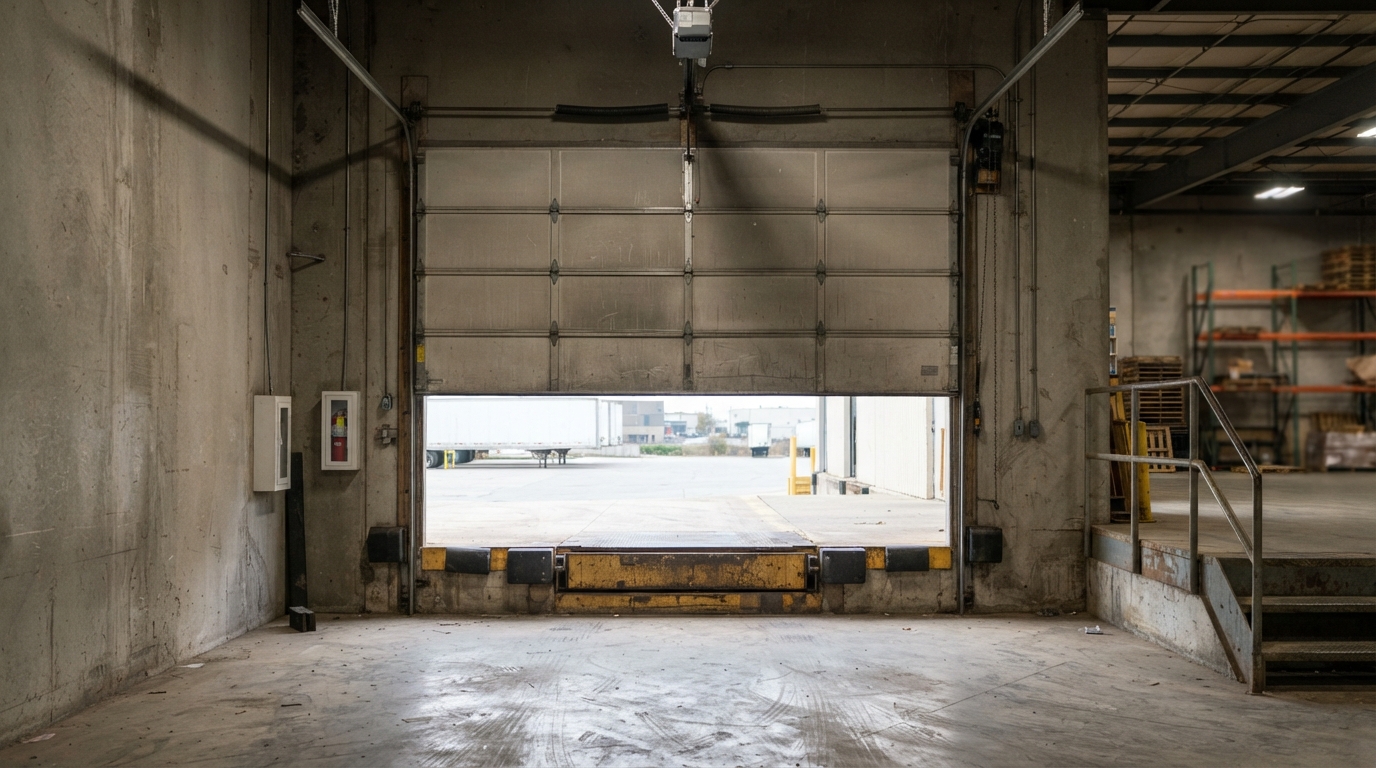
A commercial garage door often works hard throughout the day. Delivery vehicles move in and out, staff open and close the door during busy periods, and the door may be exposed to wind, dust, moisture, and accidental contact. Hinges carry much of the movement between the door sections, so a small problem can quickly affect the entire system.
For a business in Concord, commercial hinge repair should be treated as a practical maintenance concern rather than a cosmetic fix. A loose, bent, cracked, or worn hinge can make the door noisy, uneven, or difficult to operate. In some cases, continuing to use the door may place extra strain on other hardware.
What role do hinges play in a commercial garage door?
Sectional commercial garage doors are made from connected panels. Hinges join those panels and allow them to bend as the door travels from the vertical tracks into the horizontal position. They also help keep the sections aligned during movement.
When the hinges are in good condition, the sections move together. The door should travel without pronounced twisting, binding, or sudden changes in speed. The exact hinge design depends on the door, its panel construction, its weight, and the hardware used by the manufacturer.
Commercial doors may also use heavier components than residential doors because they can be larger and operated more frequently. That makes correct hinge selection important. A replacement that looks similar may still be unsuitable if its size, mounting pattern, or load rating does not match the door.
What are the early signs of hinge trouble?
Some hinge problems are easy to spot during a normal opening cycle. Others begin quietly and become clearer over time. Watch for these changes:
- Visible looseness: A hinge plate may move when the door section moves, or its fasteners may appear backed out.
- Cracks or bends: Damaged metal can change the way the panel pivots and may indicate that the hinge has been overloaded.
- Uneven door movement: One side of the door may rise or fold differently from the other side.
- New scraping or knocking sounds: Repeated noise near a hinge can point to movement, contact, or misalignment.
- Gaps between sections: A hinge problem can leave the panels sitting unevenly when the door is closed.
- Fasteners that will not hold: If screws no longer grip the panel properly, the surrounding material may also need assessment.
A single symptom does not identify the exact cause. Tracks, rollers, cables, springs, panels, and hinges work as a system. A proper inspection should consider the full door rather than replacing one visible part without checking why it failed.
Why do commercial hinges fail?
Frequent operation is one common source of wear. Every cycle creates movement at the hinge points, and high-use doors accumulate cycles faster than lightly used doors. Dirt and moisture can also contribute to corrosion or stiff movement, particularly where the hardware is exposed to the weather.
Impact is another possibility. A vehicle, pallet, loading equipment, or material may contact the lower portion of a door. The damage may be limited to one hinge, or it may distort a panel and affect several connection points.
Loose fasteners can allow the hinge to shift. Once that movement begins, the holes or mounting surface may become enlarged. Repeated vibration can then make the problem worse. A hinge may also fail after a previous repair used the wrong hardware or left the door out of alignment.
In some cases, the hinge is only showing the result of a deeper issue. A damaged roller, bent track, worn panel connection, or problem with the door balance can place unusual force on the hinge. That is why a useful repair assessment includes the surrounding components.
Can a business keep using a door with a damaged hinge?
That depends on the condition of the door, but caution is appropriate. If a hinge is visibly cracked, detached, sharply bent, or causing the sections to twist, limit operation until the door can be assessed. Do not stand under a moving door, and keep staff and equipment clear of the travel path.
A door that still opens may not be operating safely or evenly. Continuing to cycle it can increase damage to the panels, rollers, tracks, or other hardware. It can also turn a relatively contained commercial hinge repair into a more involved garage door repair.
If the door is stuck in an unsafe position, has dropped on one side, or shows signs of a broader mechanical failure, avoid forcing it open or closed. Record what happened, including any impact, unusual sound, or change in movement. Those details can help the person assessing the door understand the likely cause.
What happens during a proper hinge repair?
The first step is an inspection of the door in its current condition. The technician or supplier should identify the hinge type, examine the fasteners and mounting points, and look for related damage in the panels, rollers, and tracks. The door may also be checked for alignment and smooth movement.
If the hinge is replaceable and the surrounding panel is sound, the damaged part can be removed and matched with a suitable replacement. The replacement should be installed in the correct position with compatible fasteners. Simply tightening a damaged hinge or adding a larger screw may not provide a durable repair if the mounting surface has already deteriorated.
Where the panel or connection point is bent, cracked, or pulled out of shape, the repair may need to address that damage before a hinge is fitted. In other cases, the hinge itself is in acceptable condition and the real issue is a roller, track, or alignment problem. The correct solution depends on what the inspection finds.
After the work, the door should be operated carefully to confirm that the sections move together and that there is no unusual binding, noise, or shifting. A repair is only useful if the door can return to controlled movement.
How can Concord businesses reduce repeat hinge problems?
Keep the area around the door clear. Contact with carts, forklifts, stock, and delivery equipment is a preventable source of damage. Staff should also know not to force a door that has stopped or begun moving unevenly.
Pay attention to small changes. A new rattle, a hinge that appears loose, or a door that takes longer to open deserves attention before the problem spreads. Keep basic notes about when the issue began and how often the door is used. This is especially useful for commercial properties with multiple doors.
Regular visual checks can identify obvious wear, but they should not involve reaching into moving hardware or attempting to adjust springs, cables, or other loaded components. Commercial garage doors can be heavy, and repairs involving stored tension require appropriate knowledge and equipment.
When you need commercial hinge repair in Concord, choose replacement hardware based on the actual door rather than appearance alone. Summit premium services Inc is a garage door supplier serving Concord, ON. For information about available garage door support, visit Summit premium services Inc.
A timely assessment helps a business understand whether it needs a hinge replacement, a broader commercial Door repair, or attention to another part of the door assembly. Acting when the first signs appear can help protect daily operations and reduce avoidable disruption.