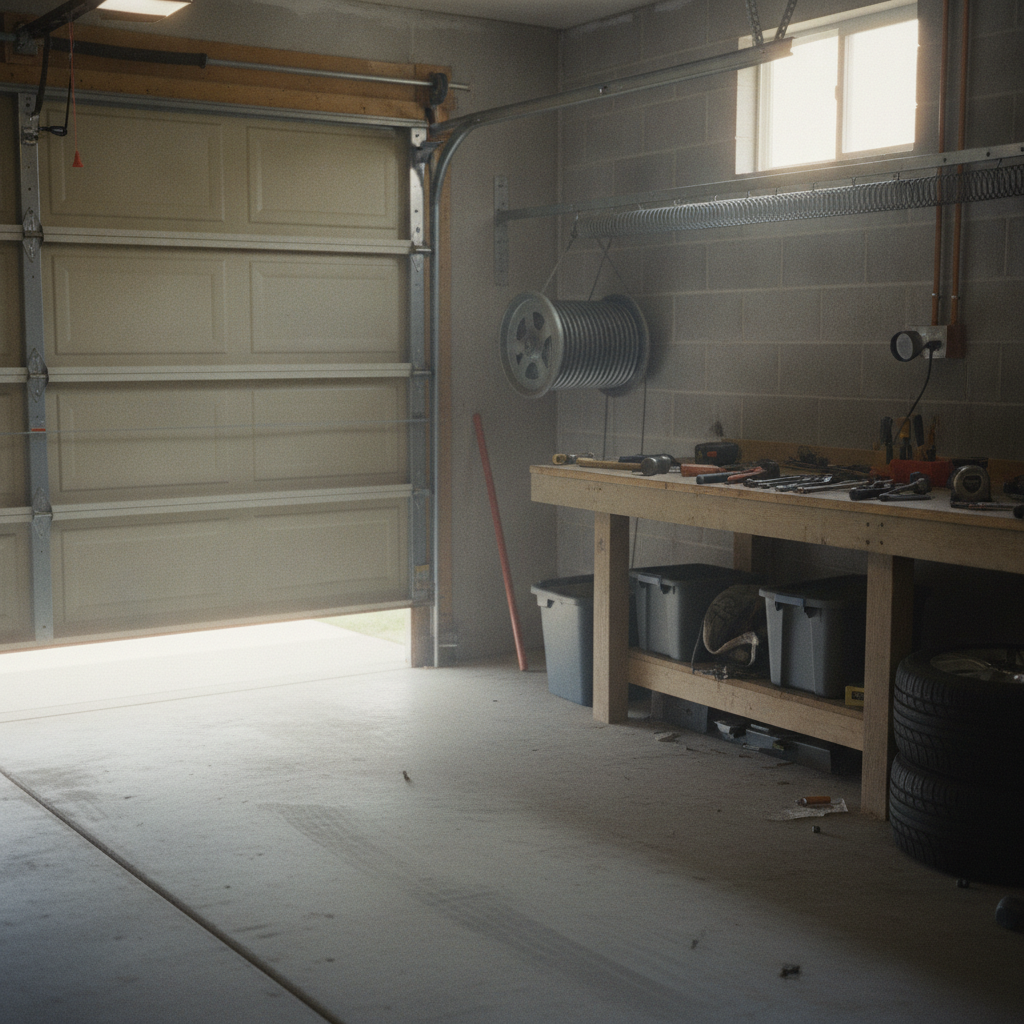
Most people never think about their garage door cables until one snaps. Then suddenly the door is crooked, stuck halfway up, or won't budge at all. As a supplier who works on doors across Concord every week, we see cable failures more often than almost any other garage door issue. Here's what these cables actually do, why they wear out, and what to expect if yours needs attention.
What Do Garage Door Cables Actually Do?
Every torsion or extension spring garage door system relies on cables to help lift and lower the door safely. The cables connect to the bottom brackets on either side of the door and wind around a drum near the torsion spring. When the spring releases tension, the cable pulls the door up along the tracks. Without properly tensioned cables, the door has no controlled way to move, and the springs alone can't do the job safely.
Think of the cables as the seatbelt of the system. The springs provide the force, but the cables keep everything aligned and prevent the door from crashing down if something goes wrong.
Why Do Cables Wear Out or Snap?
Cables are made of braided steel wire, and like any metal component under constant tension, they fatigue over time. In our experience working on homes throughout Concord, the most common causes are:
- Age and cycle count: A typical residential door opens and closes several times a day. After a few thousand cycles, the wire strands start to fray, especially near the drum or bottom bracket.
- Rust and corrosion: Humidity and winter road salt tracked into garages can accelerate rust on the cable strands, weakening them from the inside out.
- Off-track doors: If a door has ever come off its tracks, even slightly, the cable can get pinched, kinked, or unevenly stretched.
- Broken springs: When a torsion spring breaks, the sudden loss of tension often puts a shock load on the cables that can cause them to slip off the drum or snap.
- Poor installation: Cables that were sized incorrectly or wound with the wrong number of turns during a previous repair tend to fail early.
What Are the Warning Signs Before a Cable Fails?
Cables rarely snap without giving some warning first. Homeowners who catch these signs early usually avoid a full emergency repair:
- The door looks slightly crooked or tilted when opening or closing
- One side of the door seems to lift faster than the other
- You notice frayed wire strands near the bottom bracket or drum
- There's a loud bang or popping sound when the door operates
- The door reverses on its own partway through opening
If you notice any of these, it's worth having someone look at the system before the cable lets go completely. A snapped cable under tension can whip and cause real damage, not just to the door but potentially to anyone standing nearby.
Why Isn't This a DIY Repair?
We understand the instinct to search for a quick fix video and handle it yourself. Garage door cables, though, are one of the few household repairs where we genuinely recommend against DIY. Here's why:
- Stored energy: Torsion springs hold a tremendous amount of tension. Releasing or adjusting them without the right winding bars and clamps can cause serious injury.
- Precision matters: Cable length and drum winding need to be exact. Even a slightly uneven wind on one side versus the other will cause the door to hang crooked and strain the opener.
- Balance testing: After a cable replacement, the door needs to be tested for balance, meaning it should stay in place when disconnected from the opener and moved halfway. Getting this wrong shortens the life of the new cable and puts stress on the opener motor.
A trained technician can usually replace both cables (yes, we recommend doing both sides even if only one has failed, since they wear at a similar rate) in under an hour, with the right tools and safety equipment on hand.
What Happens During a Professional Cable Repair?
When we're called out for a broken or fraying cable, the process generally looks like this:
- Inspect the door, tracks, springs, and both cables to confirm the cause of the issue
- Secure the door in the open position and release spring tension safely
- Remove the old cable and inspect the drum and bottom bracket for wear or damage
- Install new galvanized cables sized correctly for your door's weight and height
- Re-tension the springs and wind the cables evenly on both sides
- Test the door's balance and run a full open-close cycle to check smooth operation
If the cable failure happened alongside other issues, like a bent track, worn rollers, or a cracked panel from the sudden drop, we address those in the same visit rather than sending a homeowner into another repair down the line.
How Can You Extend the Life of Your Cables?
A little seasonal attention goes a long way, especially with Concord's mix of humid summers and salty winters:
- Wipe down cables and hardware periodically to remove road salt residue and dust
- Keep the garage well ventilated to reduce moisture buildup and rust
- Avoid overloading the door with heavy accessories that add unnecessary strain
- Have the springs and cables inspected annually, ideally before the coldest months when metal becomes more brittle
When Should You Call a Professional?
If your door is making unusual noises, sitting crooked, or you can see any fraying on the cables, don't wait for a full snap. A same-day inspection is usually enough to catch the problem early and schedule a straightforward fix. And if the cable has already broken and the door is stuck, don't attempt to force it open. Give us a call and we'll get it moving safely again.
At Summit premium services Inc, we handle garage door repairs throughout Concord alongside our broader work in commercial door repair, hinge repair, broken glass repair, and locksmith services. Whether it's a cable, a spring, or a full door replacement, we're happy to take a look and give you an honest assessment.