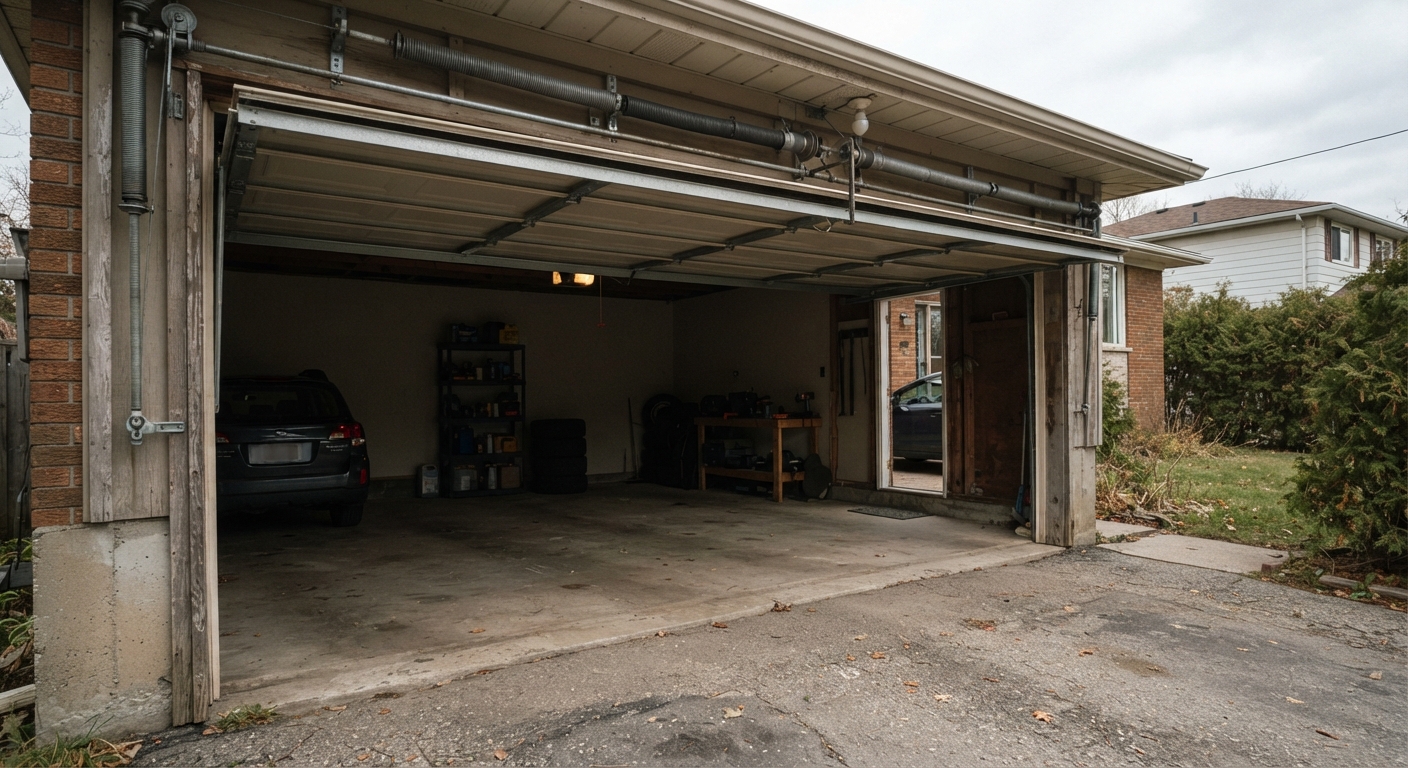
A garage door spring does a demanding job every time the door opens or closes. It helps counterbalance the weight of the door so the opener does not have to lift the full load on its own. When a spring breaks or loses tension, the door can become heavy, uneven, noisy, or unsafe to operate.
For homeowners in Concord, a spring problem often appears without much warning. One morning, the door may lift normally. Later that day, the opener may hum while the door stays in place, or the door may rise only a few inches before stopping. Knowing what the springs do and recognising the early signs can help you avoid further damage.
What does a garage door spring do?
Most residential garage doors use either torsion springs or extension springs. Torsion springs sit above the closed door, mounted on a shaft. Extension springs are positioned along the horizontal tracks, usually on either side of the door. Both types store energy and release it to help lift the door.
The spring is selected for the weight and design of the door. A spring that is too weak may struggle to lift the door. One that is too strong can cause the door to rise too quickly or place excess stress on other components. Proper replacement involves more than simply fitting a spring that looks similar.
Springs also wear gradually. Metal cycles through repeated loading and unloading, and that work eventually reduces its useful life. Changes in temperature, humidity, corrosion, and frequent daily use can affect how the spring performs.
How can you tell that a spring needs replacement?
Some warning signs are easy to spot. Others are mistaken for an opener problem or a track issue. Look for these changes:
- A visible gap in the coil: A broken torsion spring often has a clear separation where the coil has snapped.
- A door that feels unusually heavy: With the opener disconnected, a properly balanced door should not feel impossible to move by hand. Do not force it if the door is difficult to control.
- A door that will not open: The opener may run, but the door may remain on the floor or move only slightly.
- Uneven movement: If one side rises before the other, the spring system or related lifting components may require attention.
- Loose or stretched cables: A spring failure can allow a lift cable to come off its drum or become slack.
- New grinding, popping, or snapping sounds: A single loud snap can occur when a spring breaks, while repeated noises may signal wear or poor balance.
A spring can also be worn without being visibly broken. If the door drifts upward, drops when released, or refuses to remain partly open, it may no longer be balanced correctly.
Why is spring replacement a safety-sensitive repair?
Garage door springs store a substantial amount of energy. Torsion springs are under tension even when the door is closed, and extension springs can stretch significantly during operation. Releasing that energy incorrectly can cause serious injury or damage to the door, tracks, shaft, cables, or nearby property.
For that reason, spring replacement is not a good project for improvised tools or guesswork. Do not cut a spring, remove winding hardware, pull on a cable, or attempt to adjust the spring with a screwdriver. The door may also be heavier than it appears, especially when the spring is no longer helping support it.
Keep children and pets away from the garage door while the problem is being assessed. If a cable has come off, a panel is crooked, or the door is partly open, avoid using the opener. An additional cycle can worsen the problem.
What happens during a professional replacement?
A careful repair begins with an inspection rather than an immediate parts change. The door weight, spring arrangement, shaft, drums, cables, rollers, hinges, tracks, and opener connection all matter. A broken spring may be the main fault, but related wear can affect how the door operates after the new spring is installed.
The replacement spring must match the door system. Important details include the spring type, inside diameter, wire size, length, winding direction, and expected lifting capacity. Two springs that look close in size may not perform the same way.
After the spring is installed and tensioned, the door should be checked through controlled movement. A proper balance check looks at whether the door can stay in position, move evenly, and reach the floor without excessive force. The opener should not be expected to compensate for a poorly balanced door.
Other checks are practical and easy to overlook. The technician should look for cable alignment, loose fasteners, damaged rollers, bent tracks, worn hinges, and contact between moving parts. Safety reversal and photo-eye operation should also be considered when the opener is returned to service.
Should both springs be replaced at the same time?
When a door has a pair of springs, the decision depends on their age, condition, and design. If one spring breaks after years of use, the second spring has gone through the same number of cycles. Replacing only one may leave two springs with different levels of wear and different performance.
That does not mean every door requires the same repair. The existing setup, spring condition, door weight, and available replacement parts should guide the decision. A proper assessment is more useful than choosing a repair based only on the broken component.
How can you reduce future spring problems?
Basic observation helps. Pay attention to changes in sound, balance, travel speed, and the effort required by the opener. A door that gradually becomes noisy or jerky should be checked before a spring breaks completely.
Keep the area around the tracks clear, but do not apply random lubricant to the springs, cables, or tracks. Different components may require different care, and excess lubricant can collect dust. Never adjust spring tension as part of routine maintenance unless you have the correct equipment and training.
Use the door as designed. Avoid hanging items from the door, leaning ladders against it, or operating it when the panels are obstructed. If the door reverses, binds, or closes unevenly, stop cycling it until the cause is understood.
When should Concord homeowners arrange a repair?
Arrange an assessment promptly if the spring is visibly broken, the door is stuck, a cable is loose, or the opener is lifting a door that appears unusually heavy. If the door is closed and secure, leave it that way until it can be checked. If it is open, keep people away from the area and avoid trying to lower it by force.
Summit premium services Inc is a garage door supplier serving Concord, ON. For homeowners dealing with a spring problem, clear information about the door, its symptoms, and any visible damage can help begin the conversation about the appropriate garage door repair.
A broken spring is inconvenient, but it is also a useful reminder that the garage door is a large moving system. Prompt attention, the correct replacement part, and a careful balance check can help restore dependable operation while protecting the door and the people who use it.