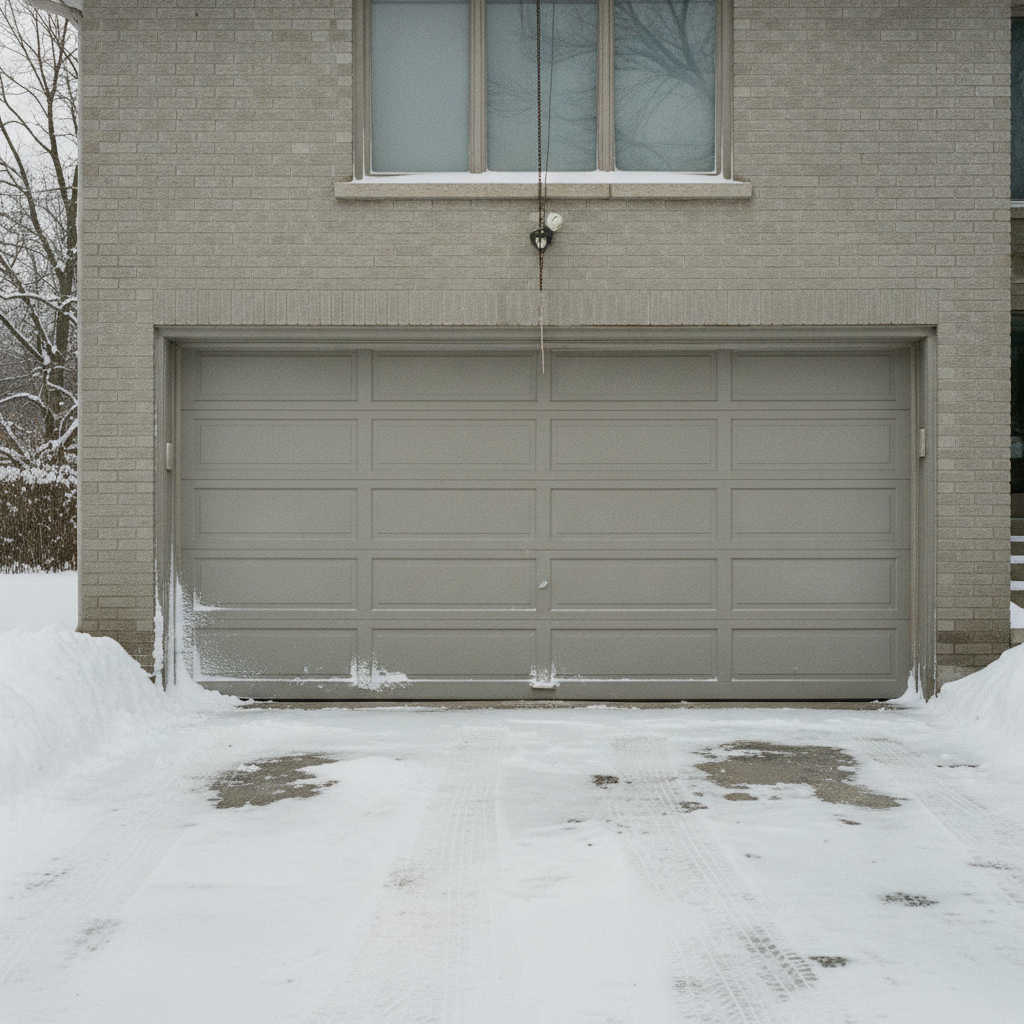
If you own a home or a business in Concord, your garage door probably works harder than you think. Between the freeze-thaw cycles we get every winter, road salt spray, and doors that open and close dozens of times a week, it's no surprise we get calls almost every day from people whose door suddenly refuses to budge or makes a noise that wasn't there last month. Here's a look at what actually causes most of the garage door problems we see around town, and what you can do before it turns into an emergency repair call.
Why Do Garage Doors Struggle More in the Winter?
Cold weather is hard on every moving part of a garage door. Steel contracts in the cold, which changes the tension on springs and can make a door that operated smoothly in October suddenly feel heavy or uneven in January. Grease and lubricant on rollers and tracks thickens up when temperatures drop, so the opener motor has to work harder just to lift the door. Over a few seasons, that extra strain wears down gears inside the opener unit faster than normal.
Ice buildup is another culprit. If snow melts against the bottom seal during the day and refreezes overnight, the door can actually freeze to the concrete. Forcing an opener to push through that ice is one of the fastest ways to strip an opener's drive gear or bend a track. We tell customers: if the door won't lift smoothly on the first try in cold weather, stop and check for ice before hitting the button a second or third time.
What Are the Warning Signs Before a Full Breakdown?
Most garage door failures don't happen out of nowhere. There are usually signs for weeks beforehand:
- Uneven movement: the door lifts crooked or one side lags behind the other, often a sign a spring is losing tension or a cable is fraying.
- Loud bangs or pops: torsion springs make a distinct popping sound when they break, usually right at the start of the day when the door is under full load.
- Slow response to the remote: if there's a delay between pressing the button and the door reacting, the opener's circuit board or sensors may be struggling.
- Sagging sections: panels that look slightly bowed, especially on older steel doors, often mean the reinforcing struts have weakened.
- Grinding or scraping in the tracks: usually a roller issue, but left alone it can pull the whole track out of alignment.
Catching any of these early usually means a straightforward repair instead of a full door replacement.
Springs, Cables, and Why We Don't Recommend DIY Here
Torsion springs are under an enormous amount of tension, enough that a spring failure has sent people to the hospital. We understand the appeal of watching an online tutorial and tackling it yourself, but this is genuinely one area where professional service is worth the cost. A misjudged spring adjustment doesn't just risk injury, it can also throw off the balance of the entire door, putting extra strain on the opener and cables for months until something else fails.
If your garage door is more than eight to ten years old and you're starting to hear noise or notice slower operation, it's usually more cost effective to have the springs and cables inspected together rather than waiting for one to fail and taking the rest of the system down with it.
What About Commercial Garage Doors and Loading Docks?
Businesses in Concord with roll-up doors, loading dock doors, or drive-through bays deal with a different kind of wear. These doors cycle far more often than a residential garage door, sometimes fifty or more times a day, and they take direct hits from forklifts, delivery trucks, and pallet jacks. We see a lot of commercial Door repair calls where a bent track or a damaged panel from a minor bump has gone unaddressed for weeks, and the door has slowly gotten harder and harder to operate as a result.
Commercial doors also rely heavily on their hinges, especially on sectional doors where each panel connects to the next. When hinges wear out or bend, the door doesn't just look rough opening and closing, it puts uneven pressure on the tracks and rollers too. Commercial Hinge Repair is one of the more overlooked maintenance items for warehouses and shops, but catching a bent or worn hinge early is far cheaper than replacing an entire panel section later.
Do Garage Doors Need a Locksmith Too?
People are sometimes surprised that a Locksmith Service applies to garage doors, but side-entry doors, service doors on commercial buildings, and manual garage door locks all use hardware that can seize, rust, or get damaged just like any other lock. If your garage door has a manual lock bar or a keyed cylinder for added security, and it's sticking or the key is getting harder to turn, that's worth having looked at before it fails completely and leaves you locked out or, worse, unable to lock up at night.
What Happens if a Window Panel Cracks?
Plenty of garage doors, especially newer carriage-style and commercial storefront-adjacent doors, include glass inserts for light. A stray baseball, a ladder mishap, or even just age and thermal stress can crack these panels. Broken Glass Repair on a garage door window isn't something to put off. A cracked panel lets in moisture and cold air, and depending on the frame, a compromised pane can affect the structural rigidity of that entire section. Replacing just the glass insert is usually straightforward and far less expensive than replacing the whole panel.
Simple Maintenance That Actually Makes a Difference
A few habits go a long way toward avoiding mid-winter breakdowns:
- Wipe down and lubricate rollers and hinges twice a year with a silicone-based lubricant, not household oil, which attracts dust and grime.
- Check the weatherstripping along the bottom of the door each fall and replace it if it's cracked or flattened.
- Test the auto-reverse safety feature by placing a block of wood in the door's path and making sure it reverses on contact.
- Keep the tracks clear of leaves, ice, and debris, especially after storms.
- Listen for new noises and don't ignore them. A garage door rarely fails silently.
Garage doors take a beating in this climate, but with a bit of attention and the right repair at the right time, most doors in Concord can run reliably for well over a decade. If something sounds off, feels heavier than usual, or just isn't closing the way it used to, it's worth having it checked before a small issue turns into a Saturday morning you didn't plan for.